Replacing a metal roof? Stop condensation from day one
When to replace
Persistent leaks, corrosion, loose fasteners, warped panels, or even “inside rain” on cold mornings are clear warning signs that repairs may no longer be effective. These problems often indicate trapped moisture and poor ventilation, making it difficult to stop condensation with simple fixes. As condensation continues to build up, it can damage insulation, accelerate rust, and eventually weaken roof components. In these cases, a planned roof replacement is often the most cost-effective solution, providing improved airflow, better moisture control, and long-term protection. Investing in the right system can finally stop condensation and end the cycle of recurring damage and costly repairs.
What to determine to prevent condensation (moisture removal)
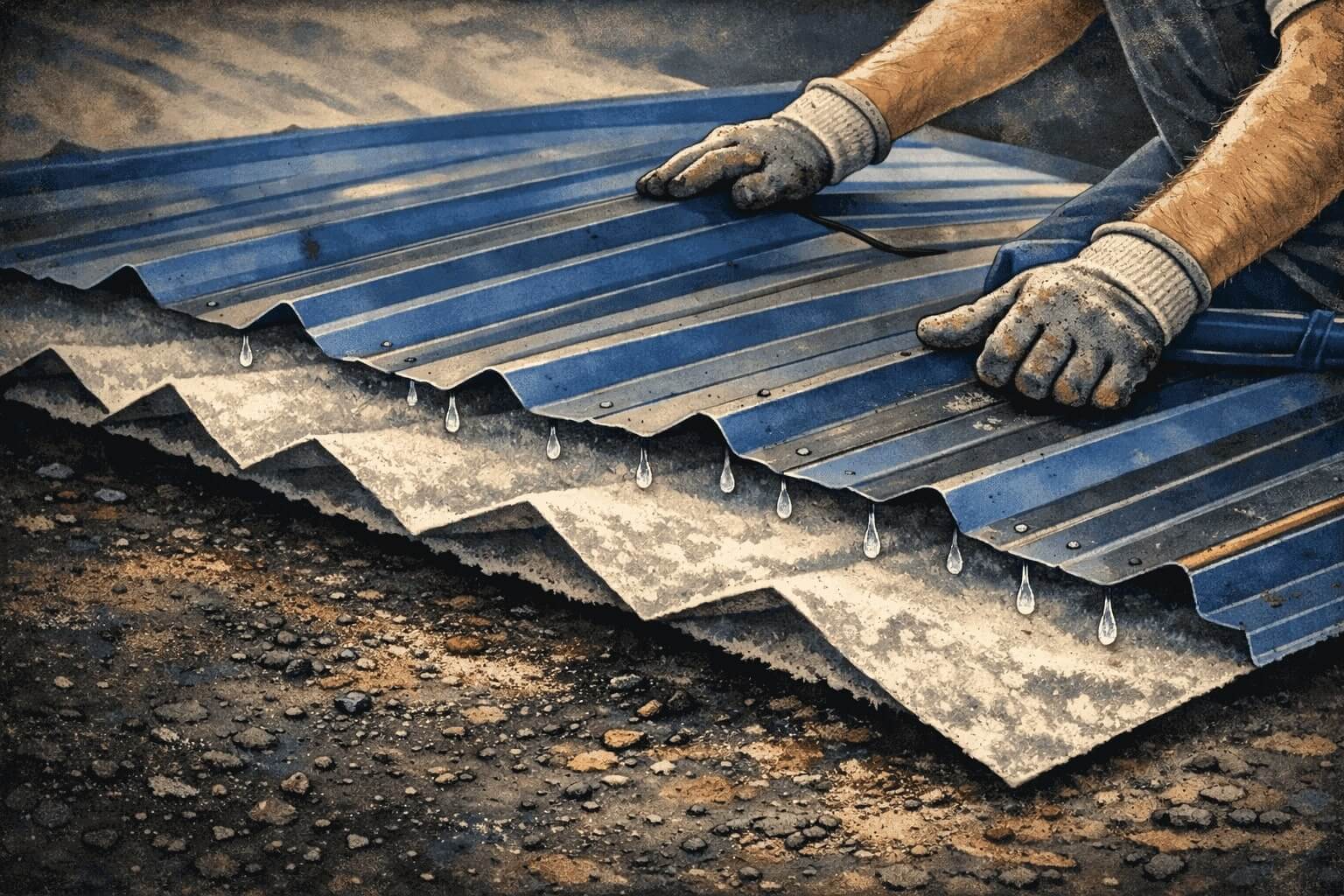
Request metal sheets with a factory-applied anti-condensation coating on the underside, which helps prevent condensation at its source. The non-woven fleece traps moisture at the dew point and temporarily stores it in the material. When temperatures rise and humidity drops, the moisture safely evaporates back into the air, preventing active dripping. This system protects vehicles, equipment, feed and packaging from water damage, while reducing the risk of corrosion and mold. Choosing sheets designed to prevent condensation also improves internal conditions, extends the life of the roof and reduces the need for ongoing maintenance or costly moisture-related repairs.
Why factory lamination is important to prevent condensation (ARU advantage)
Panels laminated on ARU applicators receive:
- Uniform pressure of INOX pressing rollers → reliable grip across the entire width.
- Stable lining tension (manual or servo-driven) → fewer waves or loose spots.
- Clean, straight inner edges with optional hot wire trimming.
A quick checklist for your roofer
- Is the factory laminated cladding specified?
- Edge quality (hot wire trimmed)?
- Ventilation plan (ridge/attic)?
- Warranty in case of condensation?
FAQs
- Repair or replace? If leaks/corrosion are widespread or if you notice “inside rain”, replacement is usually cheaper in the long run.
- What do I need to provide when replacing? Factory laminated cladding, hot-wire edges, and ventilation plan.