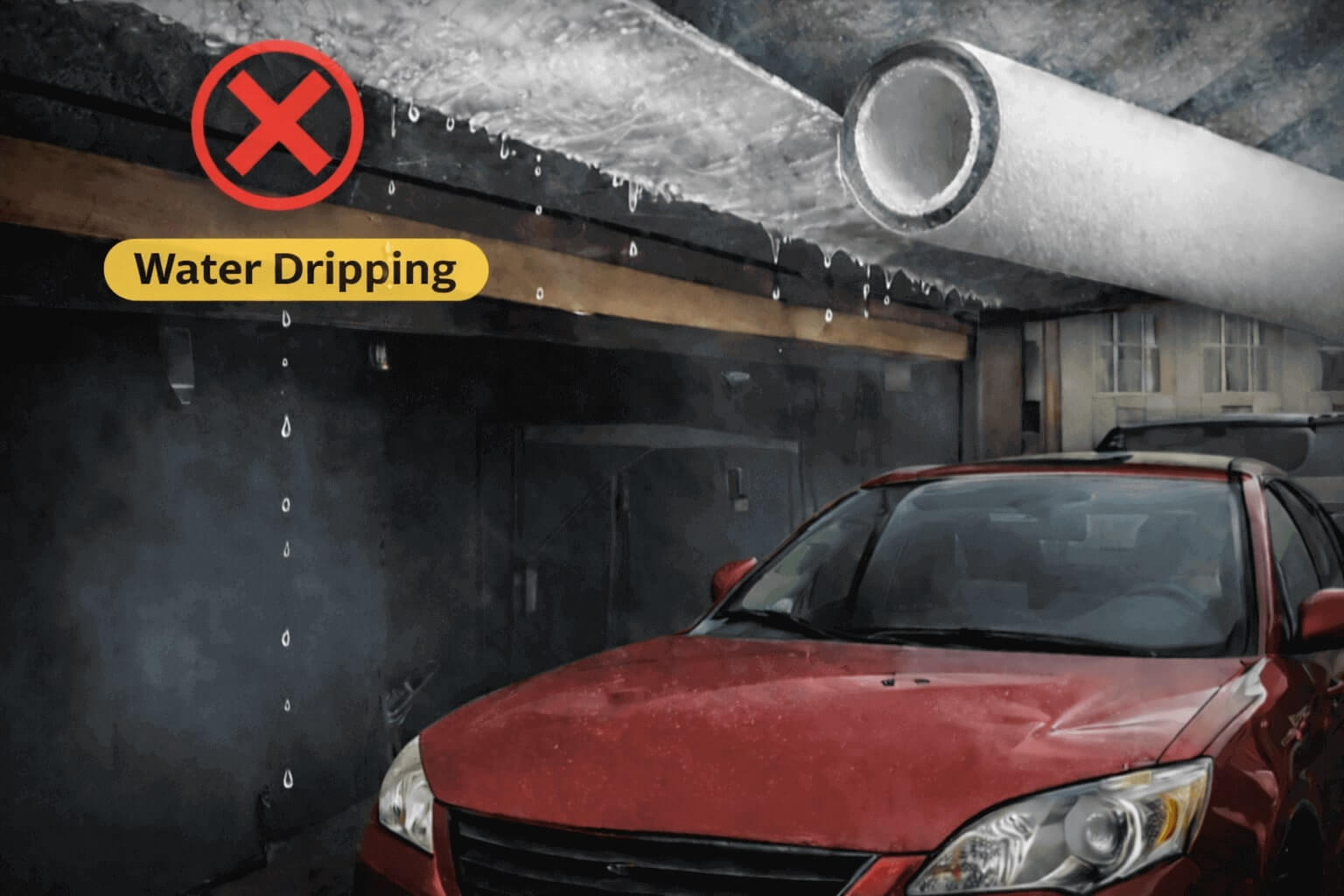
Why Is My Metal Roof Dripping? The Simple Fix You Can Specify
What’s actually happening – why is my metal roof dripping
When warm, humid air hits a cold metal panel, moisture reaches its dew point and turns into droplets. That’s the “indoor rain” commonly seen in garages, sheds, barns, and workshops – especially when structures are uninsulated or only partly enclosed. Temperature swings between day and night make the problem worse, allowing condensation to form repeatedly on the underside of the roof. Over time, metal roof dripping can soak stored items, damage equipment, promote mold growth, and accelerate corrosion. Without proper ventilation or condensation control, these drips become a persistent issue rather than a temporary seasonal nuisance.
The straightforward solution for metal roof dripping
Ask for metal panels with a factory-applied anti-condensation liner on the underside to control moisture before it becomes a problem. The non-woven fleece traps moisture inside its fiber matrix and releases it later as humidity drops, so droplets don’t fall onto cars, tools, feed, or packaging. This controlled evaporation process helps stabilize indoor conditions and reduces the risk of corrosion, mold, and water damage. By preventing active dripping, lined panels protect valuable assets, improve safety, and extend the service life of the roof, making them a reliable long-term solution for condensation-prone environments.
Why factory application matters (and where ARU helps)
Factory lamination is cleaner and more consistent than on-site films or tapes. ARU applicators use pressure-calibrated INOX pressing rollers for even contact, controlled-tension feeding (manual or servo-driven), and optional hot-wire trimming for neat liner edges. Result: a uniform bond across the full panel width and a tidy interior finish that looks professional.
Where it helps most
- Garages, garden sheds, and carports
- Home workshops and small warehouses
- Agricultural buildings and canopies
What to ask your supplier
- Panels with pre-applied anti-condensation liner
- Clean, straight interior edge (hot-wire trimmed)
- Consistent, even bond across the sheet
FAQs
- Will a liner replace insulation? No – liners capture droplets; insulation controls temperature. They work together.
- Can I add a liner later? Yes, but factory-lamination gives a flatter look and more uniform adhesion.