Ventilation, Insulation, or Liner? How to Stop Roof Condensation
Why is roof condensation such a hassle
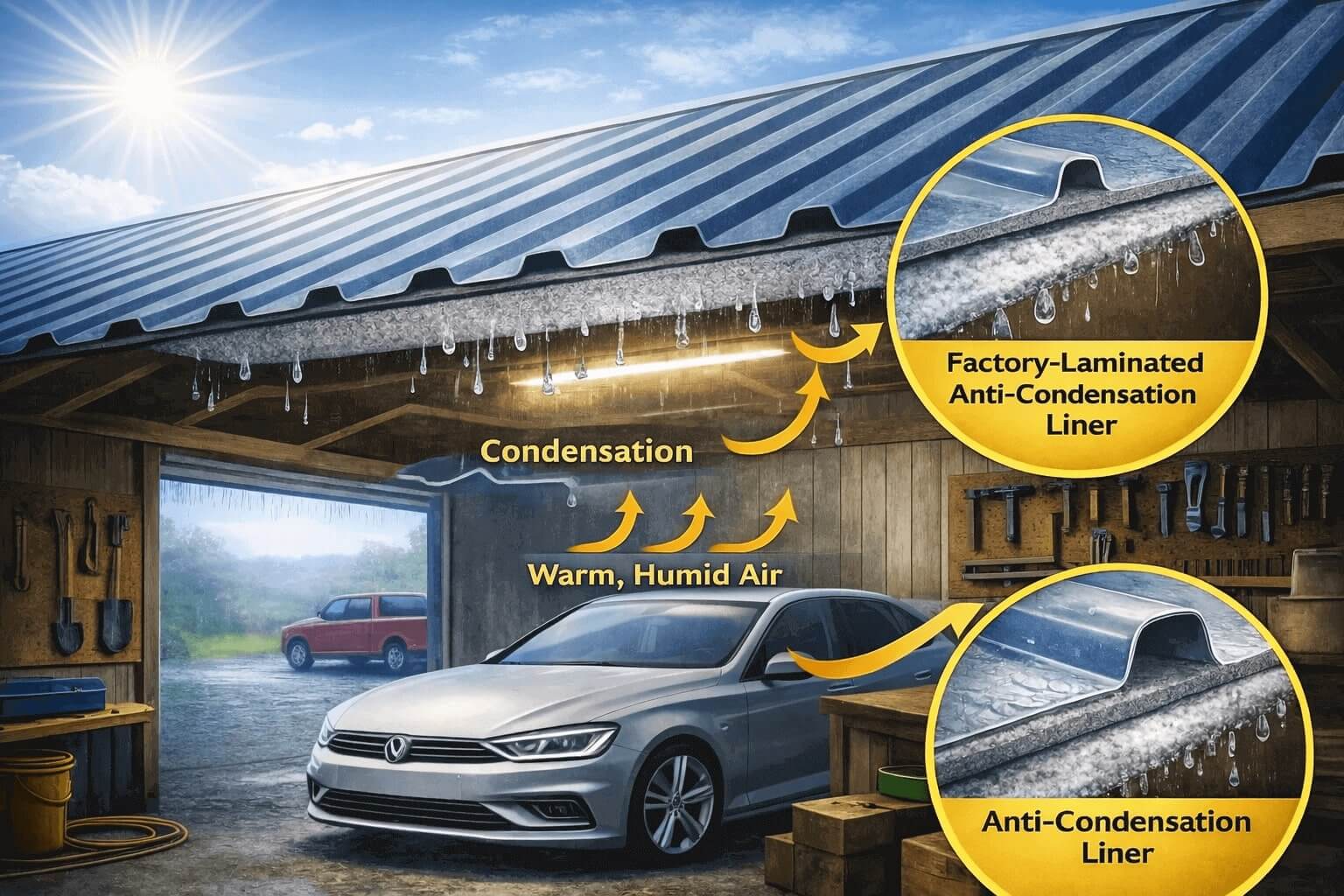
Roof condensation can lead to mold growth, damp insulation, and long-term structural damage if left untreated. To stop roof condensation, it’s essential to control moisture and improve airflow throughout your space. Proper roof ventilation allows warm, moist air to escape before it condenses on cold roof surfaces. Sealing air leaks, upgrading insulation, and installing vapor barriers can also help regulate indoor humidity levels.
Three ways to tackle moisture
- Roof ventilation: Ridge/soffit vents move humid air out.
- Insulation: Stabilizes temperature to reduce dew-point swings.
- Anti-condensation liner: Captures droplets before they fall.
Pick the right mix
- Occasional use/budget: ventilation + factory-applied liner.
- All-season comfort: insulation + vents (liner still helps above uninsulated zones).
- Retrofit: liner is the least disruptive and usually fastest to implement.
The factory-laminated advantage to stop roof condensation (ARU in the background)
When the liner is applied during panel production, you avoid fiddly on-site films and taping. ARU machines keep liner tension steady (optional servo drive), apply uniform pressure with stainless rollers, and can add protective foil for transport if needed. That means fewer install steps, cleaner ceilings, and predictable results to prevent or stop roof condensation.
Simple spaceowner checks
- Can you see a tidy, straight liner edge?
- Is the bond even (no loose spots or waves)?
- Are vents clear and unobstructed?
Bonus tips on how to stop roof condensation for a healthier, drier space
Aside from what you can do to improve your roofing, another effective way to stop roof condensation is by managing moisture at its source. Use exhaust fans in kitchens and bathrooms, repair roof leaks promptly, and maintain consistent indoor temperatures. These preventative steps not only protect your roof but also improve energy efficiency and indoor air quality.
FAQs
- Do I need vents if I use a liner? Yes – vents remove humid air; the liner handles any remaining condensation.
- Is a liner visible? Yes; ask for hot-wire trimmed edges for a clean interior line.